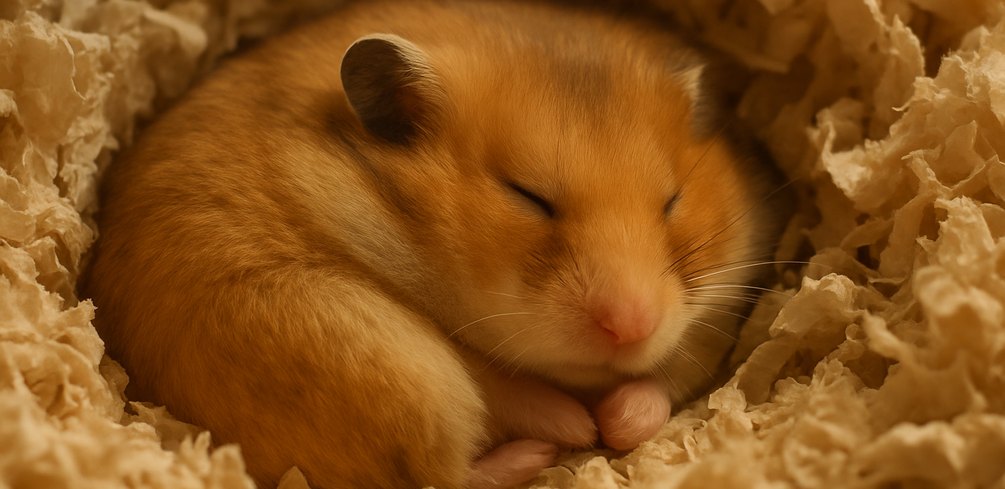
A cold, limp hamster in a chilly room is often in torpor, a short hibernation-like state, and can still be alive. Check for slow breathing and a body that bends rather than one that's stiff, then warm your hamster slowly.
Pet hamsters aren't meant to hibernate, and torpor puts real strain on them. Below: why it happens, how to tell torpor from death, how to warm a hamster safely, and when to call a vet.
Why pet hamsters go into torpor
Wild hamsters cope with winter by dropping their body temperature and slowing everything down. A pet hamster can do the same when the room gets cold, the days get short, or food runs low.
Room temperatures of about 20-22°C (68-72°F) are the usual advice for hamsters. The risk of torpor rises as a room falls toward 15°C (59°F) and below, which happens in unheated bedrooms, near drafty windows and when the heating goes off at night.
- Cold rooms, especially overnight in autumn and winter.
- Short, dark days, such as a cage in a room with the curtains kept shut.
- Too little food or bedding, so your hamster can't build a warm nest or hoard.
- Age or illness, since older and sick hamsters lose heat more easily.
Torpor or dead: the signs side by side
Stay calm and look closely for a couple of minutes before deciding anything. Breathing in torpor can be very slow and shallow, so watch the flank or hold the hamster near your cheek to feel for movement.
| Sign | Torpor | Dead |
|---|---|---|
| Breathing | Very slow and shallow, but present | None, even after watching for several minutes |
| Body | Cool and floppy or a little stiff, but limbs bend | Stiff all over (rigor), or very floppy after rigor passes |
| Response to gentle warmth | Whiskers twitch, small movements, slow waking | No change |
| Eyes and mouth | Usually closed, curled in the nest | Often half open, may look sunken |
| Room conditions | Usually a cold room or a recent cold night | Can happen at any temperature |
If you can't tell, treat your hamster as alive. Never bury a hamster you're unsure about. A vet can confirm death quickly and kindly.
How to warm a hamster out of torpor
Warm your hamster gradually. Fast heat can be dangerous, so skip hair dryers, ovens, radiators and hot water.
- Move your hamster and its nest to a room at normal temperature, about 20-22°C (68-72°F).
- Hold it in your cupped hands or tuck it inside a soft cloth against your body. Your body heat is gentle and steady.
- A warm (not hot) wheat bag or hot water bottle wrapped in a towel can sit next to the nest. Leave room for your hamster to move away from it.
- Be patient. Waking up can take an hour or more, and your hamster may look shaky or confused at first.
- Once it's moving, put food and water within reach. Don't force water or food into its mouth.
When to see an exotic-pet vet
Torpor uses up a lot of a hamster's energy, and some hamsters don't recover well. Call an exotic-pet vet the same day if any of these apply:
- No sign of waking after an hour or two of gentle warmth.
- Labored, noisy or open-mouth breathing.
- Not eating or drinking for 24 hours after waking.
- Wobbling, a head tilt or dragging legs.
- Your hamster is elderly, thin or was already unwell.
Not every vet treats small mammals, so ask for one who sees hamsters. Tell them the room temperature, how long your hamster was cold and when it last ate.
How to stop it happening again
- Keep the room steady at about 20-22°C (68-72°F), day and night. A cheap room thermometer next to the enclosure helps. See temperature tips for hamsters.
- Keep the enclosure away from windows, outside walls, doors and radiators.
- Give deep bedding and a nest box, so your hamster can build an insulated nest. The hamster cage and bedding calculator shows how much bedding you need.
- Keep a normal light pattern of daylight and darkness. Don't leave the room dark all day.
- Keep food in the bowl at all times. Hamsters like to have a hoard.
Older hamsters need the most care in winter. The hamster age calculator shows roughly where yours is in its life.
FAQs
Do pet hamsters hibernate in winter?
They shouldn't. In a warm, steady home a pet hamster stays active all year. Torpor is a sign the room got too cold.
Can a hamster die from torpor?
Yes. Torpor drains energy and can be fatal for weak, old or underweight hamsters, which is why a vet check is worth it after an episode.
My hamster is stiff and cold. Is it definitely dead?
Not always. A hamster in deep torpor can feel stiff. Warm it gently for an hour and watch for breathing before you decide. If you're still unsure, a vet can check.
Should I wake a sleeping hamster to check on it?
No. A warm hamster sleeping in its nest during the day is normal. Only check one that feels cold or hasn't moved in an unusually long time.
Cold room, still hamster: what to do first
Watch for breathing, warm your hamster slowly in your hands, and don't give up quickly. Once it's awake, fix the room temperature and book a vet check if it doesn't bounce back to eating and running within a day. If the worst has happened, this guide on a hamster's last days may help.


